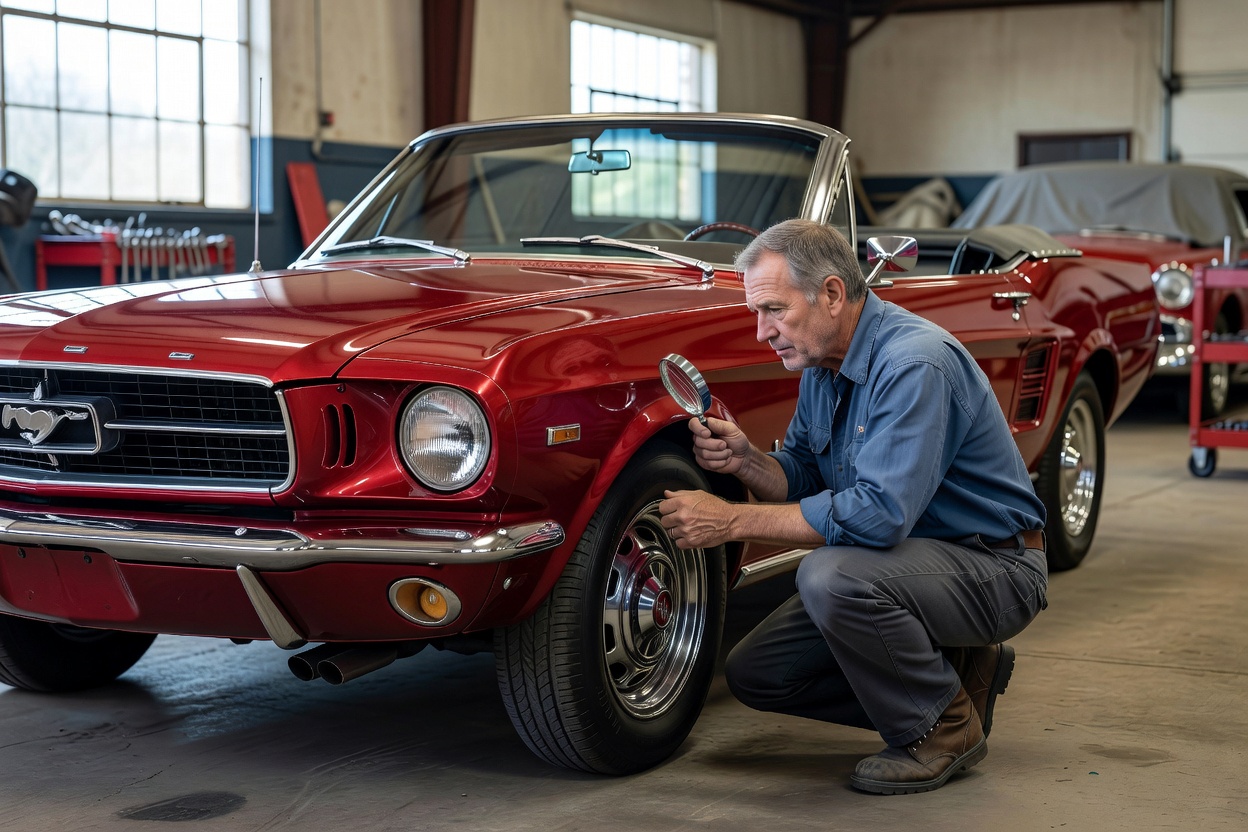
Every restoration begins with the vehicle as it exists today—not with an imagined finished version. A careful first assessment helps reveal what is sound, what needs attention and what remains uncertain. It also reduces the risk of committing to cosmetic work before structural or safety concerns are understood. Take your time, work methodically and bring in qualified help when inspection moves beyond your experience.
Look at the whole vehicle first
Walk around the car in good light. Note panel gaps, paint changes, visible corrosion, cracked glass, damaged trim and signs that parts have been replaced. Check the vehicle’s identity information against available paperwork, but do not assume documents tell the whole story. Record observations without immediately deciding that every non-original detail is a problem. A thoughtful modification may have been part of the car’s history, while an apparently tidy repair may conceal more complicated work.
Corrosion deserves particular attention. Surface rust may affect only the outer finish, while bubbling seams, soft areas, distortion or corrosion around structural members can point to deeper damage. Inspect common moisture traps and joins as far as is safe and practical. A visual review cannot establish the condition of every enclosed cavity; specialist inspection or controlled access may be needed. Previous repairs can hide corrosion, poor panel fit or incompatible materials, and removing old coatings may reveal a substantially larger scope.
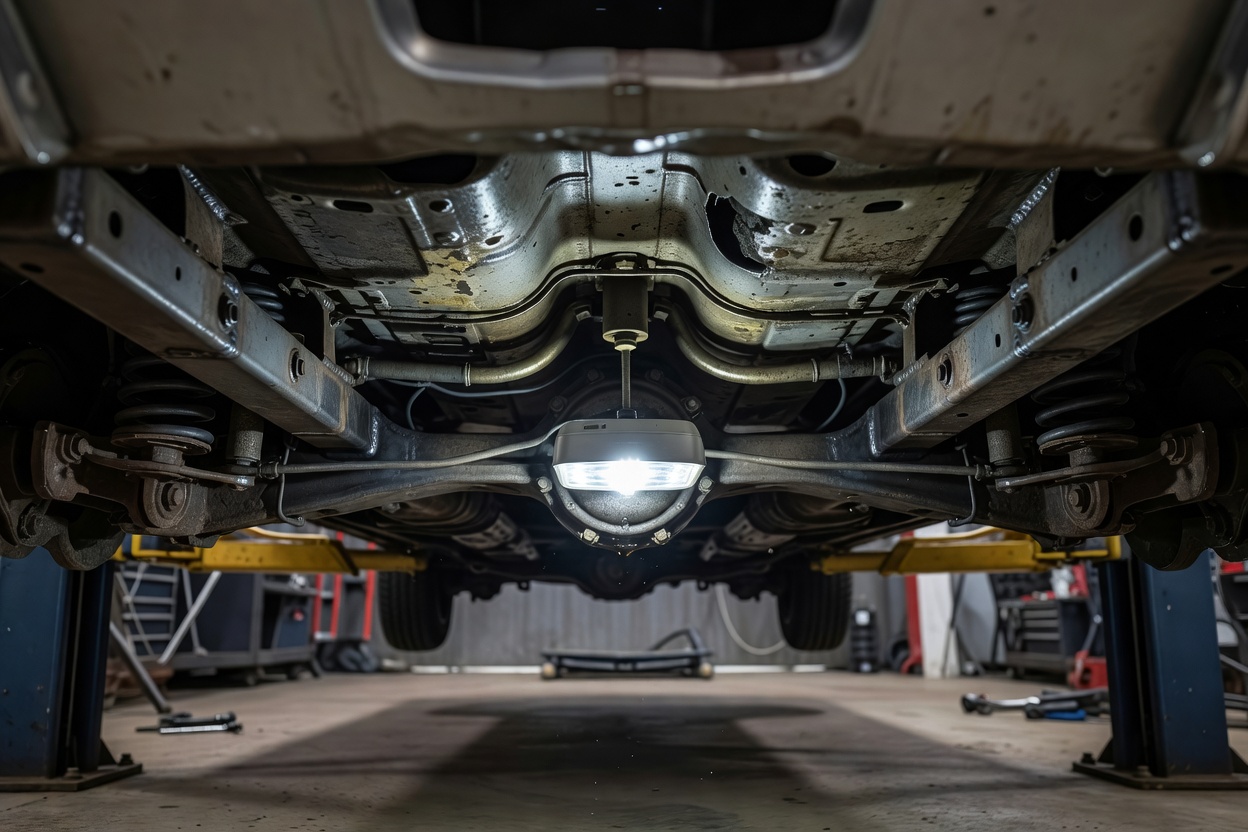
Assess systems and history
Look for leaks, damaged hoses, deteriorated rubber, loose wiring, battery corrosion, unusual noises and signs of overheating. An engine that starts is not proof that brakes, steering, fuel lines, suspension or charging components are safe. Avoid driving a vehicle until its roadworthiness has been competently assessed. Brake and structural work in particular should be entrusted to qualified people when you lack the right skills, equipment or facilities.
Gather registration papers where applicable, invoices, service records, manuals, photographs and correspondence from previous owners. Even incomplete records can provide useful dates, maintenance clues and evidence of earlier repairs. Compare visible parts with reliable model references to identify missing, replacement or modified components. Record uncertainty rather than filling gaps with guesses. Parts availability and factory details may vary by model year, market and individual vehicle, so seek vehicle-specific sources.
Choose an approach: three useful comparisons
Preservation
Best when the car retains meaningful original material and its condition allows careful conservation. It can retain evidence of age and use, but existing damage may remain visible and specialist methods may be needed.
Good for: sound cars where originality and documented history matter.
Sympathetic restoration
Repairs deterioration while retaining sound materials and period character. It balances usability with conservation, though locating compatible parts and matching finishes may take research.
Good for: vehicles needing selective repairs rather than wholesale replacement.
Complete rebuild
A broad dismantling and rebuilding scope can address extensive deterioration, but it demands more time, planning, storage and specialist coordination. Hidden damage can expand the work considerably.
Good for: vehicles whose condition and goals justify comprehensive intervention.
Make the scope realistic
Write down what you want the car to do: remain a preserved object, be driven occasionally, or return to regular use. Prioritize structural soundness, steering, brakes, tires, lighting and other safety-critical concerns before cosmetic choices. Estimate time, specialist labor, parts research, storage, transport and contingencies separately. Avoid treating an early estimate as a fixed promise; it is a planning tool, and new evidence can change the scope.
Original materials are not automatically preferable if they are unsafe or beyond repair. Replacing damaged components may be appropriate, but unnecessary replacement removes history and can introduce fit or finish differences. Ask what evidence supports a proposed repair, whether the work is reversible and how replacement parts will be documented. Confirm that the specialist has experience with the relevant material or system.
Practical initial-assessment checklist
- Photograph all sides, the cabin, engine bay, underside where safely accessible, and details before dismantling.
- Record identity marks, known ownership history, service records and open questions.
- Note corrosion, panel alignment, old repairs, leaks, missing pieces and non-original components.
- Arrange competent inspection of structure, brakes, steering, suspension and electrical safety.
- List priorities, preservation goals, storage needs, specialist tasks and parts to research.
- Keep dated notes and label removed parts so discoveries remain traceable.
What to know
Incomplete documentation, hidden corrosion, earlier repairs and scarce or uncertain parts can all change the project. Leave room for investigation before setting an irreversible scope. A professional assessment is especially useful when structural condition, safe lifting, hazardous materials or roadworthiness is uncertain.
Related guides
Bodywork and paint · Mechanical preservation · Automotive history
Need help framing your next step?
Send a general question about planning or preservation.
Contact the journal